Medaglia turca di Crimea

Per approfondire la conoscenza delle decorazioni, della loro conservazione e compravendita.
Deepening knowledge about decorations, their preservation and buy and sell.

Moderatori: Novelli, Lambertini, Mario Volpe, Tilius, nicolad72

Medaglia turca di Crimea

Messaggioda claudio2574 » giovedì 13 settembre 2012, 23:23

Buonasera a tutti.
La medaglia in questione mi affascina particolarmente. Sperando di non essere troppo noioso, visto che e' tutto sommato abbastanza comune, vorrei presentarne tre esemplari e fare una domanda agli esperti.
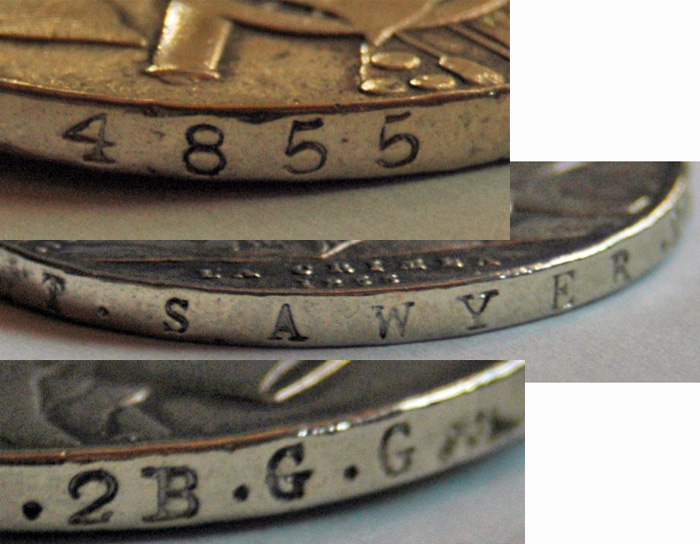
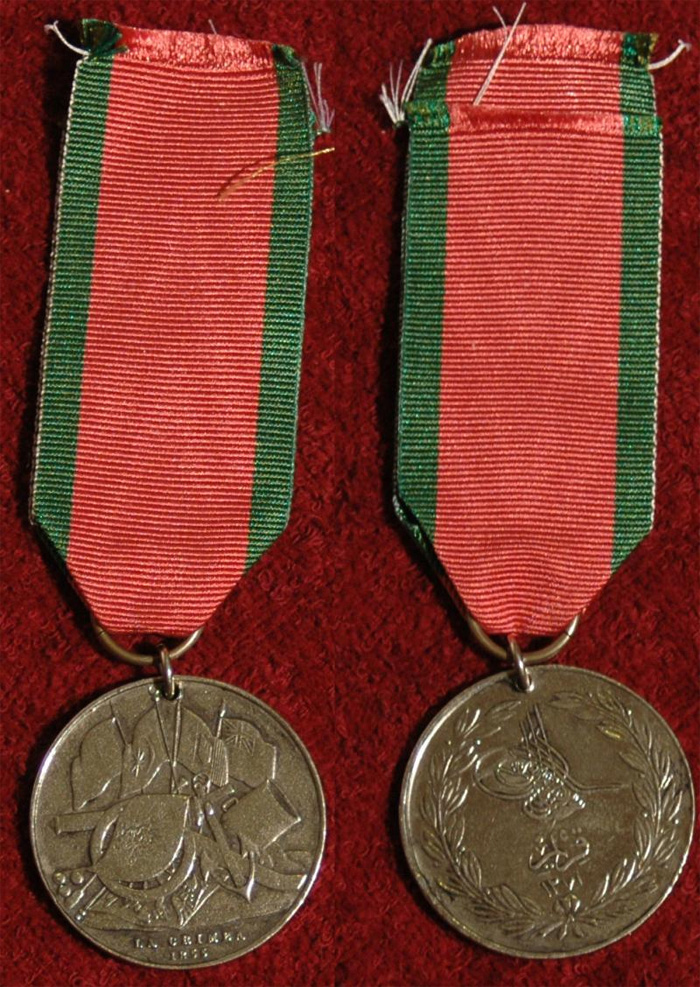
Cominciamo con una sarda, intestata ad un inglese (Sgt Thomas Sawyer, 2 btg Gren Guard). La medaglia ha un diametro di 36.8 mm, e' spessa 2.5mm e pesa (nastro escluso) 25.1g. Non era una lega di grande titolo (800/1000) e si consumava con facilita'.
Immagine
Immagine

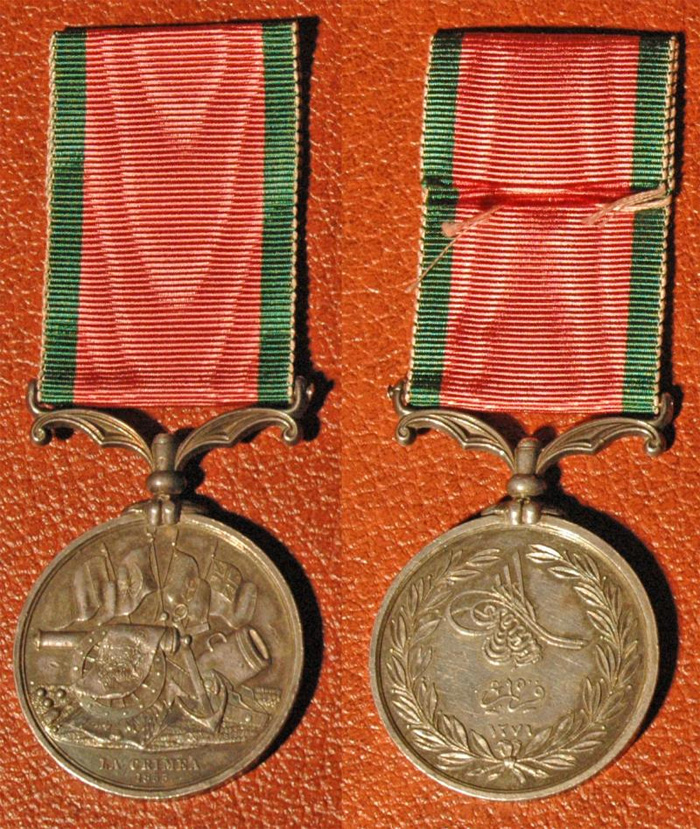
Allora gli inglesi che l'avevano ricevuta se la facevano rifare da Hunt e Roskill, lasciando bandiere e scritte come nel conio sardo, ma con titolo 950/100 e dimensioni maggiori (diametro 37.3 mm, spessore 3.3 mm, peso 35.3 g); sospensione "british".
Immagine

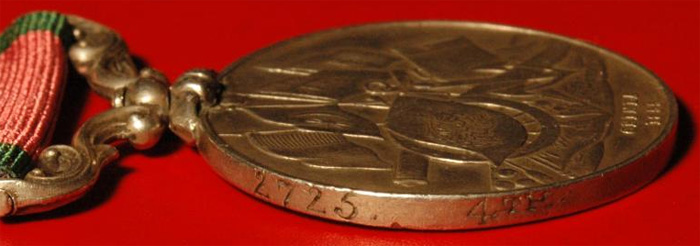
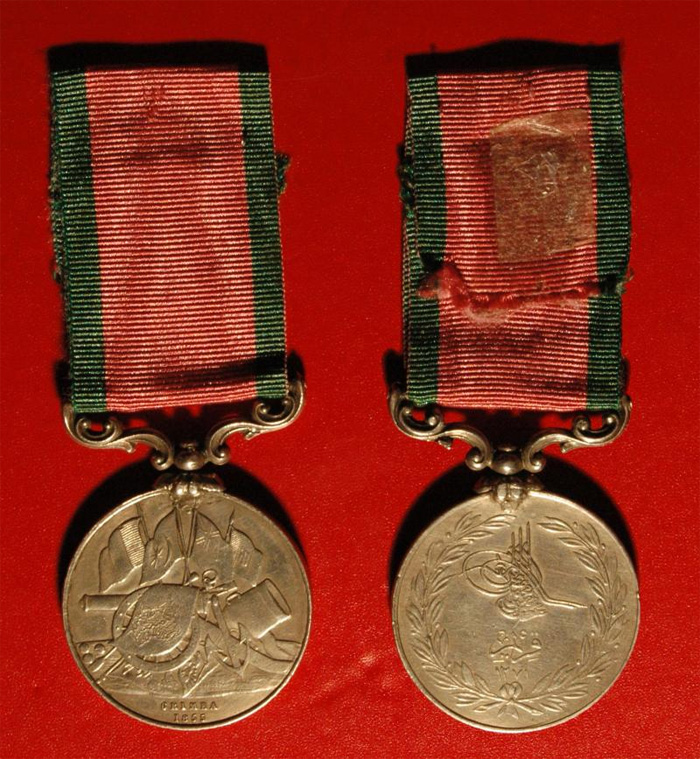
Infine un esemplare inglese, con tanto di dati sul bordo (2725 Pte G Gower, 4th Regiment Of Foot), messi un po' al risparmio:
Immagine
Immagine

Ed ora la domanda: qualcuno potrebbe essere cosi' gentile da postare la foto della versione francese?
Grazie a tutti.
Non chi comincia ma quel che persevera
Avatar utente
claudio2574
 
Messaggi: 150
Iscritto il: mercoledì 1 dicembre 2010, 18:58
Località: Cerveteri (RM)

Re: Medaglia turca di Crimea

Messaggioda Lord Acton » venerdì 14 settembre 2012, 9:58

Io ne ho vari esemplari in collezione... :) ma tutti della versione sarda... :? mi dispiace. [confused.gif]

Lord Acton
Amiamo il servizio straordinario... le imprese giudicate assurde o impossibili (A. Dumas)
Lord Acton
 
Messaggi: 2891
Iscritto il: giovedì 10 aprile 2003, 13:42
Località: Napoli

Re: Medaglia turca di Crimea

Messaggioda Montenotte » venerdì 14 settembre 2012, 14:13

Buongiorno,

nel 2008 PIASA ne aveva due in asta ancora visibili nel catalogo online

http://www.piasa.auction.fr/FR/v12038-p ... ex_p8.html

Riguardo al modello di Hunt and Roskell fu prodotto in seguito al naufragio del bastimento Pomona che trasportava casse con 22.000 medaglie destinate ai soldati inglesi.
Il sultano sostituì solo una parte delle medaglie, per altro con il modello sardo, il governo britannico affidò la fabbricazione delle mancanti a ditte private tra cui appunto H&R.
La sospensione originale era il classico anello spesso sostituito dall’interessato con sospensioni mutuate, dalle commemorative inglesi per le campagne di Cina, India o Crimea.
Cordialmente

Montenotte
When you have eliminated the impossible, whatever remains, however improbable, must be the truth.
Avatar utente
Montenotte
 
Messaggi: 811
Iscritto il: sabato 19 settembre 2009, 21:41
Località: Dipartimento del Tanaro

Re: Medaglia turca di Crimea

Messaggioda Mario Volpe » venerdì 14 settembre 2012, 15:36

Qualche elemento anche qui:

viewtopic.php?f=21&t=4316&p=55202#p55202
Si Deus nobiscum quis contra nos
(motto dell'Ordine di Filippo il Magnanimo - Assia-Darmstadt)
Avatar utente
Mario Volpe
Moderatore Forum Ordini Cavallereschi
 
Messaggi: 3800
Iscritto il: sabato 1 aprile 2006, 18:58
Località: Roma

Re: Medaglia turca di Crimea

Messaggioda claudio2574 » venerdì 14 settembre 2012, 17:16

Mario Volpe ha scritto:Qualche elemento qui:

http://www.iagiforum.info/viewtopic.php ... 202#p55202


Chiedo venia per non averla saputa trovare da me, eppure ho cercato... [ops.gif]

Quanto alla scelta di far fare da parte del governo britannico delle medaglie "copia" di quelle sarde, resto sorpreso. Sapevo la storia del naufragio, che spiega la condizione di consegnare quello che c'e' al momento; ma non spiega come mai uno Stato potentissimo non abbia fatto semplicemente riconiare le proprie.
Dove sbaglio?
Non chi comincia ma quel che persevera
Avatar utente
claudio2574
 
Messaggi: 150
Iscritto il: mercoledì 1 dicembre 2010, 18:58
Località: Cerveteri (RM)

Re: Medaglia turca di Crimea

Messaggioda soragni ugo » lunedì 17 settembre 2012, 18:51

mi rivolgo a Montenotte che nel dare i numeri mi sembra assai ferrato (scherzo, naturalmente). Mi picerebbe conoscere il numero dei contendenti della guerra di Crimea. Poi, i soldati turchi, sono stati insigniti della medaglia turca ? Se si, con quale tipo?
Ho letto poi da qualche parte che le medaglie inglesi furono coniate in 257.000 esemplari, non le sembra un po' troppo?
grazie ugo
soragni ugo
 
Messaggi: 281
Iscritto il: martedì 27 luglio 2010, 21:59

Re: Medaglia turca di Crimea

Messaggioda Tilius » lunedì 17 settembre 2012, 19:25

soragni ugo ha scritto:Mi picerebbe conoscere il numero dei contendenti della guerra di Crimea.

Immagine Francesi 400.000
ImmagineOttomani 300.000
ImmagineInglesi 250.000
ImmagineSardi 18.000
ImmagineLegione Tedesca 4.250
ImmagineLegione Svizzera 2.200
Immagine Legione Slava 1.400
- - - - - - - - - - - - - - - - - - - - -
ImmagineRussi 700.000
ImmagineLegione Bulgara 3.000
ImmagineLegione Serbo-Montenegrina 2.000
ImmagineLegione Greca 1.000

Totale 1.000.000 circa vs. 710.000 circa

http://en.wikipedia.org/wiki/Crimean_War

Forze imponenti per un conflitto che, scoppiato onde reprimere le fameliche mire espansionistiche russe sui territori dell'ormai moribondo Impero Ottomano, si conscluse con un clamoroso nulla di fatto: le imposizioni del Tratta di Parigi verso il (nominalmente) sconfitto Impero Russo furono così lievi da venire di fatto vanificate nel giro di neanche un decennio.

Immagine

Il primo a sinistra é Cavour.
Маурицио Тигльери
Immagine
Avatar utente
Tilius
Amministratore
 
Messaggi: 13094
Iscritto il: mercoledì 25 aprile 2007, 19:35
Località: Gefürstete Grafschaft Tirol

Re: Medaglia turca di Crimea

Messaggioda Montenotte » martedì 18 settembre 2012, 14:41

soragni ugo ha scritto:mi rivolgo a Montenotte che nel dare i numeri mi sembra assai ferrato (scherzo, naturalmente). Mi picerebbe conoscere il numero dei contendenti della guerra di Crimea. Poi, i soldati turchi, sono stati insigniti della medaglia turca ? Se si, con quale tipo?
Ho letto poi da qualche parte che le medaglie inglesi furono coniate in 257.000 esemplari, non le sembra un po' troppo?
grazie ugo


Buongiorno,
mi dispiace ma non riesco più trovare un ottimo articolo di John Hayward sulla Medaglia Turca di Crimea e sul sito di Spink non è più visibile. Se qualcuno l’avesse, sarebbe gentile se volesse pubblicarlo sul forum.
A memoria mi pare che quelle destinate ai militari britannici fossero circa 75.000. Più rare quelle francesi si parla di 1.500. Quelle destinate alle truppe sarde intorno alle 20.000 di cui parte spedite in Inghilterra.
La medaglia era riservata agli alleati, per i soldati Turchi mi pare che venne creata la Iftihar Madalyasi, la Medaglia della Gloria, inizialmente per la difesa di Silistra e la campagna del Danubio, poi mi pare venne generalizzata (vado sempre a memoria).
Circa il modello inglese le fonti britanniche confermano la produzione di 275.000 medaglie distribuite a tutti gli alleati, a cui vanno aggiunte le fabbricazioni private francesi di Chobillon . Tale medaglia fu riservata a coloro che parteciparono all’invasione della Crimea; per il teatro di guerra del Baltico fu coniata un’apposita medaglia distribuita anche ai francesi.

Cordialmente ;)
When you have eliminated the impossible, whatever remains, however improbable, must be the truth.
Avatar utente
Montenotte
 
Messaggi: 811
Iscritto il: sabato 19 settembre 2009, 21:41
Località: Dipartimento del Tanaro

Re: Medaglia turca di Crimea

Messaggioda claudio2574 » martedì 18 settembre 2012, 15:27

Non so se fosse questo; numeri qui ce ne sono pochi, e parla solo della medaglia di Crimea e relative barrette (quindi non della medaglia turca di Crimea, se non mi sbaglio):

The Issue of British Crimea War Medals 1854-56 by John Hayward:

Where have all the unnamed medals gone? Dishonest naming up of genuine unnamed campaign medals in an official or in a private but contemporary style has been noted by the numismatically minded since the 1880s or earlier. British Crimea War Medals, many of which were issued unnamed, have been like manna from heaven to the dishonest medal artisan and, because of the large numbers involved, have always been a popular target for their unwelcome attentions. As part of the generous, but seemingly one-sided inter-change of medals and decorations which followed the conclusion of the Eastern War of 1854-56, something over 300,000 British Crimea War Medals, together with the related clasps, were struck and prepared by the Royal Mint or their subcontractors for distribution to the Military and Naval Forces of the Allies - Britain, France, Sardinia and Turkey. Medals despatched to representatives of the French, Sardinian and Turkish Governments, which comprised well over half of the Mint striking, were issued unnamed, as indeed were many of those issued to British service personnel.

It was the Duke of Newcastle's intention that all medals to British troops should be named at the Royal Mint. However, Lord Panmure, Secretary of State for War in the succeeding Palmerston administration, was more concerned with a speedy issue of the medals than the time-consuming operation of having them named. After being informed that about 6,000 medals could be struck in a week and only 1,200-1,500 could be lettered in the same period, Panmure, after discussion, dispensed with his earlier idea just to number each medal and instructed "that the rim of the medal usually set apart for the name of the wearer should be kept plain and free of the number in order that the wearer might if he please have his name engraved there hereafter...". This instruction was followed with the first issue of Crimea Medals to a small number of British troops which took place at Horse Guards on 18 May 1855 where Queen Victoria presented the awards to wounded and other veterans representing each Regiment and Corps of the British Army as well as to members of the Naval Brigade and Royal Marines. These medals were presented unnamed, but the fact that they were pinned on by the Queen herself is the probable reason that many recipients never returned their "Royal Medals" for naming when the policy changed and they were subsequently invited to do so. They feared a different medal would be named and returned. Hence most of this first issue has come down to us unnamed or named in a variety of unofficial styles and often dated to commemorate this special event in the lives of recipients.

Large numbers of these unnamed pieces were sent in batches to the Army in the Crimea, but then came a change of heart. Part of a War Office Memorandum dated 5 December 1855 reads "Officers and men who have received medals in the Crimea, if they require their names to be engraved on them, and send them in for the purpose, Lord Panmure has no objection to it being done". For the record, the word 'engraved' should have read impressed, stamped or machine lettered - the machines for the purpose were already at the Mint and the Master had also given his assurance that a new and improved machine for impressing the medals together with additional types "have been long since ordered".

Like those veterans presented with their medals at Horse Guards, many other recipients from the mass of British troops who received unnamed medals decided not to return them for naming, preferring to retain the medal with which they were originally issued. Some retained them in their unnamed state, others had them named unofficially which explains the variety of styles - some crudely and some finely executed - and the incidence of regimental depot impressing. Only a relatively small number were returned to the Royal Mint or Hunt & Roskill, its main subcontractor, for naming. In contrast and importantly, virtually all Crimea Medals granted posthumously to individuals killed in action, mortally wounded or died of disease were officially impressed with naming details.

To summarize, British Crimea War Medals are commonly to be found named in the following styles:
i. Official impressing - similar to the Military General Service Medal 1793-1814 and the Naval General Service Medal 1793-1840 in serif Roman capitals. Apart from the fraudulent Light Brigade Medals covered in the article in the OMRS Journal, it has not been noticed that this particular style has been widely copied by the unscrupulous.
ii. Depot or local station impressing (that is, regimental naming) - the difficulty of emulating depot naming has not closed this avenue to those with an interest in producing fraudulently named items because the sheer diversity of the private impressing styles used on Crimea Medals has created an opening to those with ill intent. Hence it is necessary to be aware that some medals offered as depot-named awards have been named with the intention to deceive. Experience and comparison with known regimental styles are the only ways to distinguish the correct from the incorrect and even among experts this can be a matter of opinion.
iii. Engraved naming - here there are a considerable number of styles and again it is a matter of experience and comparison. It may not be inaccurate to regard some medals as 'officially' engraved as some awards, mainly to officers, were subcontracted for naming to Hunt & Roskill.

British Crimea War Medals: Issues of Consideration
This account of the issue of Crimea Medals leaves us with the conclusion that there should be a significant number of unnamed Crimea Medals on the market and indeed this is confirmed by the fact that about 35 years ago they were available in large numbers, today they rarely appear. Where are they now?. It is worth considering that crude naming on medals, often undertaken by local jewellers on behalf of recipients who did not wish to return their medals, may in itself be a mark of authenticity. Also, when attempting to establish the authenticity of medals that are depot impressed or engraved, it is worth examining areas of wear and contact marks, and be very cautious of apparent depot impressing or engraving which overlies such imperfections. The fact that medals issued to the next-of-kin of those killed in action or died of other causes were issued impressed (though on rare occasions an engraved medal can appear that, for specific and proven reasons, is correct - I have noticed less than six such casualty medals in over 40 years), has not deterred tamperers from producing engraved medals to those killed in action (such as those to the Light Brigade covered in the OMRS article).

Terminology can often be misleading and collectors will do well to bear this in mind when seeing the words 'Light Brigade' against a Crimea Medal in an auction catalogue or sales list. Indeed the medal may well be that to a member of the Light Brigade, but remember that this simply means he served with the Light Brigade, not that he 'charged'. Those definitely identified as charged, as a result of such factors as being killed in action, being the recipients of gallantry awards or being noted by a comrade, have their names recorded in capital letters in the standard reference work Honour the Light Brigade by Lummis and Wynn (J.B. Hayward & Son, 1973). Just over 500 names of the 2000 'Light Brigade' members listed in the work are thus recorded, leaving well over 100 others who charged not identified due to lack of evidence. Although one can bring logic to bear, for example it might be thought that one could discount Farriers of all ranks who would have been needed to attend to the horses, there are still significant pitfalls. For example, who would have imagined that the colourful Private John Vahey, the regimental butcher of the 17th Lancers, would have participated in the Charge. Similarly another medal that appeared at auction was to a Light Brigade man under arrest at the time of the Charge, yet, against the odds he escaped, charged and subsequently was sentenced to 20 lashes - logic would have excluded an imprisoned man from appearing on the Roll of Light Brigade Chargers. Clearly evidence is more reliable than logic, but it is for each individual to determine his own standards of proof.

We would be interested to hear from website readers if they would like a particular medal or topic to be examined in these notes, but please note that no correspondence can be entered into although your suggestions will be given serious consideration.


L'articolo e' ancora rintracciabile sul web con una opportuna macchina del tempo, dal sito Spink del 2002 ;)
Forse l'Autore ne ha scritti altri in tempi diversi? E' certamente un'autorita' in materia.
Non chi comincia ma quel che persevera
Avatar utente
claudio2574
 
Messaggi: 150
Iscritto il: mercoledì 1 dicembre 2010, 18:58
Località: Cerveteri (RM)

Re: Medaglia turca di Crimea

Messaggioda soragni ugo » martedì 18 settembre 2012, 23:58

dopo quanto mostrato da Tilius, ho voluto fare una ricerca anche su Wikipedia di lingua francese e italiana e relativi altri file trattanti appunto la guerra di Crimea. Sono giunto alla conclusione che in fatto di numeri c'è una discordanza in certi casi anche abissale. Questo forse è dovuto alla diversa valutazione delle forze potenzialmente da porre in campo e quelle che effettivamente parteciparono alla sola guerra di Crimea?
Ugo
soragni ugo
 
Messaggi: 281
Iscritto il: martedì 27 luglio 2010, 21:59

Re: Medaglia turca di Crimea

Messaggioda claudio2574 » mercoledì 19 settembre 2012, 0:59

Ecco un altro articolo di Hayward, del 2010 e sempre da Spink. Stavolta l'argomento e' centrato sulla medaglia turca, ma non trovo numeri delle produzioni sarda e francese, ne' tantomeno perche' H&R abbiano prodotto medaglie "sarde". E' molto dettagliato sulle vicissitudini e da' qualche dettaglio sulla fine del "Pomona", nei pressi di Malta. Il Comandante e' andato a fondo con la nave (Schettino, ci sei???).
Qualcuno fa immersioni? Sta a 180 m di fondale nei pressi di Gozo...Immagine

After the War was Over - Turkish Crimea Medal 1856-1862
By John Hayward


Being a foreign Award, information relating to the entitlement and issue of the Turkish Crimea to British Forces appears to be somewhat lacking. The following notes collated from contemporary War Office and Foreign Office correspondence may be of further interest.

Queen Victoria's generosity in conferring the British Crimea Medal on all Allied Forces personnel prompted a similar rush of generosity from French, Sardinian and Turkish Heads of State - the Sultan of Turkey seemingly being the most open-handed, whilst his French and Sardinian counterparts were far less liberal in allocating Medals and Decorations to their Allies.

21.2.1856 - The Sultan of Turkey announced his intention to distribute a silver medal to the Troops of the Allied Armies serving or having served in the Crimea. Lord Stratford de Redcliffe, Ambassador to Constantinople, requested information from Sir William Codrington C in C, Sebastopol, as to numbers required and who will be entitled... "Officers or Men of Her Majesty's Army" ... Codrington replied ... "taking the 8th September 1855 as a limit ... the approximate number required would be 3,000 for Officers and 50,000 for Men. If claimants exceeded these numbers, a supplementary list must be sent to the Turkish Government." A number of War Office letters went back and forth in March, complaining of not being informed about the Medal and being ... "kept quite in the dark about the Sultan's intentions."

20.3.1856 - Lord Panmure, Secretary for War, directed Codrington in a Minute that any discussion on Turkish Decorations or Medals must be conducted through the Foreign Office, and some official communication should be made of the Sultan's intention, in order for the Queen's Pleasure to be taken on the subject and that Her Thanks may be expressed through proper channels. Panmure confirmed these directions a week later in no uncertain terms and requested Nominal Lists of the Officers and Men considered for the Award.

5.5.1856 Panmure confirmed the Sultan's intention to confer the Order of the Medjidie and also a silver Medal in the proportions stated: - Medjidie, 1st Class 3; 2nd Class 10; 3rd Class 40; 4th Class 70; 5th Class 900. Medals, Officers 3,000; Men 50,000. He also added that Her Majesty gratefully accepts the Decorations intended to be conferred on Her Troops by the Sultan.

14.6.1856 - Codrington to Panmure ... "Your Lordship is in possession of the Lists, which have already been sent home, both of Officers and Men, who have obtained the Crimea Medal; and the distribution of the Turkish Silver Medal to Officers, as well as other Medals for the Men might be regulated and checked by these lists."

1.11.1856 - G.A. Wetherall, Adjutant General to General Yorke, Military Secretary at H.Q. ... "After deducting from the number of Crimean Medals (British) issued those which have been delivered to the representatives of deceased Officers and Men, there remains a balance in numbers of 74,000 living of all ranks, who are entitled to receive the Turkish Silver Medal." This information and the numbers required was confirmed by the Foreign Office to Lord Stratford on 14.11.1856 and he reported from Constantinople that orders had been given to the Mint for striking the Medals.

26.12.1856 - Foreign Office to Lord Stratford ... "Ascertain if the Naval Brigade and Marines may share in the Turkish Decorations." Stratford replied on the 31st ... "apply for them and the Medals will be given by the Turks."

17.1.1857 - Lord Stratford reminds the Foreign Office that although 25,000 Medals have been obtained for the Land Forces including the Naval Brigade and the Royal Marines lately serving in the Crimea, the services of the Fleet on the coasts of the Peninsula have not been recognized. Admiral Lyons suggests that justice would be obtained by a distribution of Medals to the Officers and Men of the Royal Squadron ... the compliment however could hardly be accepted without a return [favour]. Should your Lordship approve of the idea ... I conceive that the number of Medals required for the Turkish Squadron might be fairly limited by their distribution among the Officers and Men of those Ships which took part in the bombardment of Sebastopol!

31.1.1857 - Foreign Office to War Office ... "What answer should be given?"

4.1.1857 War Office replied ... "Lord Panmure concurs in Lord Stratford's proposal that application be made to the Turkish Government for Medals and Decorations for Officers and Men of the Royal Squadron on the understanding that Medals be given to the Officers and Men of the Turkish Ships which took part in the Bombardment of Sebastopol. ... Request ... you authorize Lord Stratford to make application to the Turkish Government accordingly."

23.2.1857 Admiralty to War Office ... "Their Lordships are of the opinion that it will be right that the whole Naval Service should be taken together including the Officers and Men serving afloat, those employed on shore with the Naval Brigade and the Marine Batallion, which served in the Crimea. ... My Lords request that Lord Panmure will acquaint Lord Stratford that the whole number of Medals required for the Officers and Men employed will be 25,000 and of the number one ninth or 2,800 will be for Officers."

14.3.1857 - Lord Stratford to Foreign Office. This letter refers to his previous letter of 17.1.1857 regarding an honourable exchange - no reply has been noted and no further correspondence on this subject has been found for the remainder of 1857.

17.2.1858 - Lord Stratford to Foreign Office ... "The Ottoman Minister for Foreign Affairs informs me that 44,000 Turkish Medals are now ready at the Mint ... the remaining 50,000 Medals, which will complete the number required for the Army and Navy are being manufactured."

On 25.2.1858 the Earl of Derby formed his second Cabinet: Earl of Malmesbury - Foreign Secretary; General Peel - Secretary of War. Two days later Lord Stratford de Redcliffe resigned as Ambassador to Constantinople and was succeeded by Sir Henry Bulwer.

22.9.1858 - Bulwer to Foreign Office ... "Out of 74,000 Turkish Medals required for the British Army and Nave, only 47,000 are ready ... Instruct whether I am to accept this number or wait till the whole number is completed!!" Foreign Office replied on 18.10.1858 ... "send to England at first opportunity, by one of H.M. vessels, the 47,000 on account."

29.11.1858 - Mr Gasolani to Bulwer. The 47,000 Medals embarked on board the British Steamer 'Brenda' and were delivered to the War Office on 25th January in five boxes - one box with 10,000 Medals was collected by the Admiralty.

On 28.6.1859 Viscount Palmerston formed his 2nd Cabinet: Lord John Russell - Foreign Secretary; Sidney Herbert - Secretary of War.

30.6.1859 - War Office to Foreign Office ... "the estimated requirement for the Army is 74,000 and for the Navy 25,000 (together with 913 for the Late Turkish Contingent) totalling 99,913. Of this number 47,000 have been received, of which 37,000 have been allotted to the Army and 10,000 to the Navy and there remain due 37,000 to the Army, 15,000 to the Navy and 913 to the Turkish Contingent, a total of 52,913. ... it is requested that you will call the attention of H.M. Ambassador in Constantinople to the number of Medals, which are still required to complete the entire issue."

3.8.1859 - Bulwer to Foreign Office ... "the balance to complete the 74,000 Medals will be forwarded as soon as the necessary amount of silver can be obtained for the purpose" (refer to 22.9.1858 notes for similar). One week later Bulwer states ... "19,000 Medals are ready at the Mint - orders have been given for the remainder to be struck without delay."

8.11.1859 - War Office to Foreign Office ... "on 10th August it was further stated that 19,000 Medals are ready and we were led to believe that ... in less than one month's time the total number required would be ready for transmission. As none have yet been received ... if the entire are not yet ready, send as many as you can."

21.11.1859 - Bulwer to Foreign Office ... "22,000 Turkish Crimea Medals are now ready and will be forwarded to England at the first opportunity. The remainder are in course of preparation."

31.12.1859 - Bulwer to Foreign Office ... "waiting for the return of a Liverpool Steamer from Odessa to forward to London the 22,000 Turkish Medals, which have been ready for some time."

15.2.1860 - Bulwer to Foreign Office ... "22,000 Turkish Medals in five cases on board 'Pomona', bound for London."

16.3.1860 - Foreign Office to Bulwer ... "'Pomona' has foundered. Were the Turkish Medals insured?" Bulwer replied "The Turks sent the Medals - I fear they were not insured."

20.3.1860 - General Commanding Malta to War Office .. "'Pomona' foundered 5 miles off Gozo on morning of 22nd ultimo." C in C Malta stated ... "The 'Pomona' went down carrying with her the Captain and the greater part of her crew. ... in 80 to 90 fathoms of water ... and would preclude I believe any hope of raising her or recovering the cases of Medals."

29.5.1860 - Bulwer to Foreign Office ... "I have been informed that 20,000 Medals are completed - the remainder will be struck when the Mint can be put in possession of 400,000 Piastres - the sum necessary to complete the number in question."

3.7.1860 - Bulwer to Foreign Office ... "20,000 are to be forwarded by safest conveyance ... the Sultan ordered that the lost Medals in 'Pomona' should be replaced - But, owing to the embarrassed state of the Exchequer and the material time required for their manufacture, some time must elapse before they can be transmitted."


11.7.1860 - Bulwer to Foreign Office ..."I have today shipped on board the British Steamer 'Olymphus' four cases containing 18,000 Turkish Medals." (refer to number stated in note of 3.7.1860)

8.8.1860 Foreign Office to Bulwer ..."18,000 Turkish Medals received. Any of these intended for the Turkish Contingent, or will they receive a distinct Medal? (i.e. without the Arabic 'Crimea' on the obverse). The greater portion of the Force did not serve in the Crimea." The Foreign Office continued to pressure Bulwer regarding the Turkish Contingent for some time - "I want a direct answer to my enquiry about Medals for the Turkish Contingent." etc etc

14.8.1860 - Bulwer to Foreign Office ..."the 18,000 Medals are intended exclusively for the soldiers of the English Army, not for the Contingent. The Turks consider that the Contingent has already received the Medals due to it." A Foreign Office note of 25.8.1860 puts the Medals still owed by Turkey at 12,913, even after deducting the 22,000 lost in the 'Pomona', which the Sultan promised to replace - these figures are confirmed in FO 83/691.

At various times later in 1860, during 1861 and 1862 numerous communications were sent to the long suffering Sir H. Bulwer, which included variations on the foregoing text "and whether there is any prospect of these Medals, which have so long remained due to the British Army and Navy, being forwarded to this country at an early date."

The Turkish Contingent claim rattled on until suddenly, like an end to an Arabian Night's fairy tale, Bulwer stated to the Foreign Office on September 16th 1862 that "I have procured from the Sublime Porte and transmit herewith, 913 Turkish Medals required for distribution to the Late Turkish Contingent." - I think that was the end of the Turkish Crimea Medal operation - a 'delight' that had lasted about six years!

*****

t appears that British Crimean fatalities, including those who died of disease, were not eligible for the Turkish Medals (notes dated 1.11.1856 refer).

Does the shortfall, including the 'Pomona' loss totalling 35,000 Medals, explain why so many fresh groups lack the Turkish Award?

Did Hunt & Roskell and others manufacture Turkish Crimea Medals because Officers preferred a better quality piece? - I think not. - There was a serious shortage of these Awards and H&R supplied the demand. The shortage of 'British die' Turkish Medals on the market is almost certainly due to the 'Pomona' disaster.

I hope this article has answered a few queries - it has for me.
Non chi comincia ma quel che persevera
Avatar utente
claudio2574
 
Messaggi: 150
Iscritto il: mercoledì 1 dicembre 2010, 18:58
Località: Cerveteri (RM)

Re: Medaglia turca di Crimea

Messaggioda Montenotte » mercoledì 19 settembre 2012, 8:34

soragni ugo ha scritto: Questo forse è dovuto alla diversa valutazione delle forze potenzialmente da porre in campo e quelle che effettivamente parteciparono alla sola guerra di Crimea?
Ugo


Le cifre riportate si riferiscono alle forze complessivamente mobilitate. Allo sbarco di Kalamita il 13 settembre 1854 gli alleati potevano contare su una forza di 64.000 uomini.

27.000 Inglesi
30.000 Francesi
7.000 Turchi

A cui si opponevano circa 52.000 russi. In Crimea al culmine del confronto non credo si siano fronteggiati più di 130-150.000 uomini per parte, tuttavia considerando perdite e rimpiazzi il numero di soldati coinvolti fu sicuramente maggiore. Bisogna poi considerare anche gli altri teatri di guerra Silistra, il Danubio, Kars, il Baltico etc.

Ecco un altro articolo di Hayward, del 2010 e sempre da Spink. Stavolta l'argomento e' centrato sulla medaglia turca, ma non trovo numeri delle produzioni sarda e francese, ne' tantomeno perche' H&R abbiano prodotto medaglie "sarde". E' molto dettagliato sulle vicissitudini e da' qualche dettaglio sulla fine del "Pomona", nei pressi di Malta


Grazie Claudio era l'articolo a cui mi riferivo.

[cheers.gif]
When you have eliminated the impossible, whatever remains, however improbable, must be the truth.
Avatar utente
Montenotte
 
Messaggi: 811
Iscritto il: sabato 19 settembre 2009, 21:41
Località: Dipartimento del Tanaro

Re: Medaglia turca di Crimea

Messaggioda Montenotte » mercoledì 19 settembre 2012, 21:11

ne' tantomeno perche' H&R abbiano prodotto medaglie "sarde".


Riguardo il conio di H&R, se consideriamo che il primo contingente di 47.000 medaglie fu ricevuto e distribuito nel giugno 1859 e che le successive 18.000 arrivarono nell’agosto 1860, se queste erano di tipo sardo può essere che H&R abbiano ricevuto quest’ultimo come campione, se non altro perché il modello inglese doveva essere andato esaurito dopo oltre un anno.
Comunque ho girato la domanda a Mr. Hayward, vediamo se mi risponde.
When you have eliminated the impossible, whatever remains, however improbable, must be the truth.
Avatar utente
Montenotte
 
Messaggi: 811
Iscritto il: sabato 19 settembre 2009, 21:41
Località: Dipartimento del Tanaro

Re: Medaglia turca di Crimea

Messaggioda claudio2574 » giovedì 20 settembre 2012, 7:15

Partecipando ad un forum inglese (Victorian Wars Forum) ho gia' fatto questa domanda e la risposta e' stata questa:

...I have not seen the medal in question, but the quality of the [Sardinian] Turkish Crimea was considered to be rather poor, so Hunt and Roskill produced a better quality replacement medal, this may be what is being referred too in the description...

...Turkish Crimea, Sardinian die, a fine-quality 'Officer's Indulgence' piece, with Indian Mutiny style suspension...


Confesso di non capire cosa significhi Officier's Indulgence; l'ho chiesto ma non ho avuto risposta.
Non chi comincia ma quel che persevera
Avatar utente
claudio2574
 
Messaggi: 150
Iscritto il: mercoledì 1 dicembre 2010, 18:58
Località: Cerveteri (RM)


Torna a Faleristica


Chi c’è in linea

Visitano il forum: Nessuno e 2 ospiti